Things to Know Before Booking The Pet Grooming Treatment at Your Dog Groomers in Guntersville AL
pet grooming takes anywhere in between 2-4 hours depending on the size of your pet and how long back your fur baby had the last pet grooming treatment. It is not a good idea to hurry the pet grooming procedure as it bad for your dog’s well being.
If you need to cancel or reschedule your fur baby grooming procedure, please give at least 24 hours notice to avoid paying late canceling charge.
All breed grooming charges will be validated by the family pet groomer at hand over.
Typically, a dematting cost will be applied to matted coats on your pet. Extra cost may be requested for canines with difficult temperament.
General Dog Advice for Pet Dog Parents in Guntersville AL
Tips on Treating Hot Spots on Dogs for Pet Parents in Guntersville AL
Learn more about, hot spots in dogs or read below.
Hot spots on your pet are red, moist, aggravated and hot lesions that are generally discovered on a dog’s head, chest or hip area that can become rather agonizing for the pet. Anything that irritates the skin and causes a pet dog to scrape or lick himself can trigger a hot spot, such as allergies, bug, mite or flea attacks, bad pet grooming, underlying ear or skin infections and continuous licking and also chewing triggered by tension or boredom.
Pets who are not groomed regularly and also have actually matted, unclean coats can be susceptible to creating hot spots, as can canines that swim or who are subjected to wet weather. Furthermore, pets with hip dysplasia or anal sac disease can begin licking the skin on their hind-end. Thick-coated, longhaired breeds are most generally impacted.
Hot spots on dogs usually grow at a startling pace within a short time period because pet dogs tend to lick, chew and also scratch the impacted areas, further aggravating the pain on the skin.
Tips for Pet Parents in Guntersville AL with Their Pet’s Skin Problems
Since your dog’s skin is a reflection of her basic health, it’s critical to keep it in good form. When your pet dog has a skin problem, he or she might scratch, chew, and/or lick excessively. External parasites, infections, allergies, metabolic disorders, and stress, in addition to a combination of these, could be to fault.
To find out about, skin issues on your dogs or read below.
Examine your family pet’s ears and teeth first, as these are regularly the source of odor-causing germs in animals. Keeping your dog clean by bathing him regularly might be all that is required to remove the smell.
When utilized based on the directions on the package, a lot of pet fragrances are not likely to be damaging to your fur baby. Pet dogs with dermal allergic reactions, on the other hand, may have skin discomfort, while those with nasal allergies might be affected by the smell. If you wish to utilize pooch fragrance, follow the directions carefully and seek advice from a vet if your dog has a history of allergies.
Please talk to your veterinarian if grooming shows useless and your canine smells nasty, to figure out if there is any reason to develop a disease or a cause.
Other skin problems on your dog include:
- Drainage of blood or pus
- Dry, flaky or otherwise irritated skin
- Loss of hair, bald spots
- Hot spots (one particular location where itching is extreme)
- Lesions
- Rashes
- Soreness or inflammation
- Round, scaly patches on the face and paws
- Rubbing face onto furniture or carpets
- Scabs
- Scratching, licking or chewing at skin
- Swellings, bumps or skin staining
Tips on Dental Care for Dog Owners in Guntersville AL
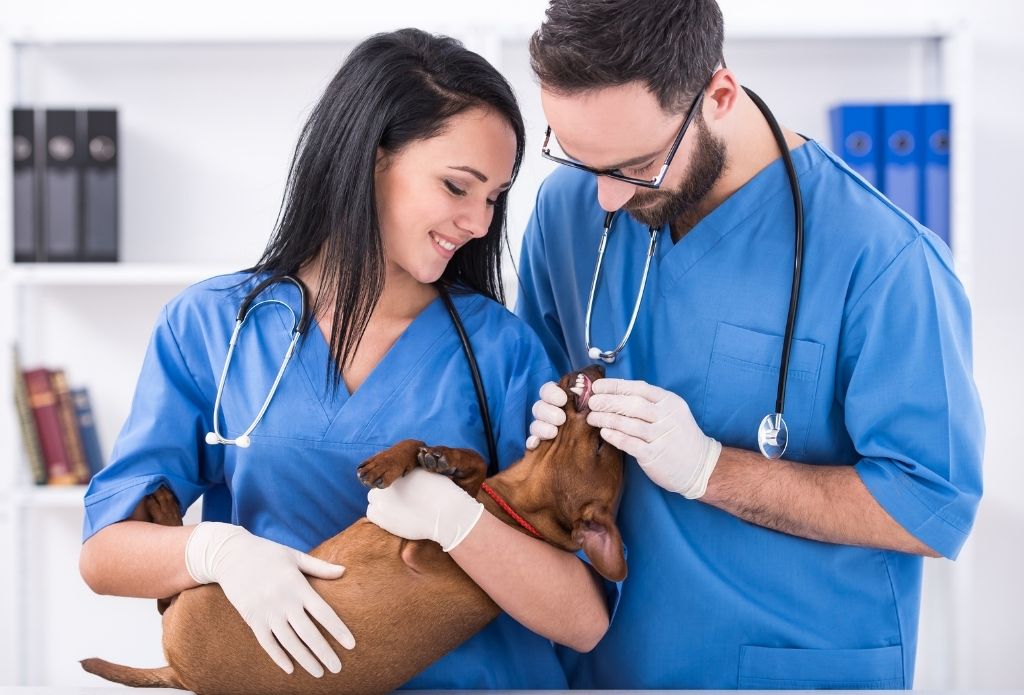
Routinely brushing your pet’s teeth, together with a healthy diet and plenty of chew toys, can go a long way towards keeping her mouth healthy. Germs and plaque-forming foods can trigger build-up on a dog’s teeth. This can harden into tartar, possibly triggering gingivitis, declining gums and missing teeth. Numerous pooches show signs of gum disease by the time they’re 4 years of ages because they aren’t supplied with appropriate mouth care.
Provide your canine routine home checks and you’ll have an extremely pleased pooch with a dazzling smile. We recommend brushing 2 to 3 times a week.
Initially, you’ll wish to get your family pet used to the concept of having her teeth brushed. To do this, begin by carefully massaging her lips with your finger in a circling motion for 30 to 60 secs once or twice a day for a few weeks before carrying on to their gums and teeth.
After a couple of sessions or when your pooch appears comfy, put a bit of dog-formulated toothpaste on her lips to get her used to the taste.
Next, present a tooth brush created particularly for
Ways to Protect Against Dental Issues in Dogs
Provide your pooch treats that are specially formulated to keep canine teeth healthy, and ask your vet about a specifically formulated dry food that can decrease the formation of plaque and tartar.
Chew toys are likewise a terrific method to satisfy your pet’s natural desire to munch while making his/her teeth strong. Chomping on a chew toy can help massage the gums and keep teeth clean by scraping away soft tartar, plus it also minimizes your pet dog’s overall tension level and avoids boredom. Ask your vet to recommend toxin-free rawhide, nylon and rubber chew toys.
Avoiding Eye Problems in Dogs
If their locks aren’t tamed appropriately, longhair breeds can form eye problems. To defend against this, keep your dog’s vision clear by diligently cutting the hair surrounding their eyes. Soaps and medications can be major aggravations, so protect your pet dog’s eyes before washing, applying ointments or using any flea treatments.
When driving, it’s a lot much safer to have the windows only partly down, not fully down, and make sure your dog’s head is inside the vehicle not peeking out. This will help avoid injury from road debris or insects getting in their eyes. Heavy wind can also dry your pet dog’s eyes, perhaps resulting in irritation and infection.
Consider doing some investigation to learn if your pet dog’s breed is vulnerable towards eye disorders, like glaucoma or progressive retinal atrophy. You ought to also get your pet’s eyes examined during yearly vet visits.
Ear Care for Dogs Who Swim
Canines that have regular baths or go swimming a lot can be more susceptible to ear irritation and infection. To prevent infection, put cotton inside your canine’s ears before baths or swimming and make sure to dry their ears out thoroughly as soon as they’re done.
Helping Fearful Canines
Some pets may also be scared when getting their nails cut. Watch out for any indications of distress like trembling, panting, whimpering, cowering, tail-tucking, grumbling, or snapping. Even with the most patient and constant of intros, there are some pets who are unable to get over this fear.
If your pet is fearful of getting their nails trimmed, do not force them to submit. Instead, see a vet or a groomer in Guntersville and get expert assistance. Otherwise, you could organise an appointment with a Certified Applied Animal Behaviorist (CAAB), a veterinary behaviourist (Dip ACVB) or a Certified Professional Dog Trainer (CPDT).
Dealing with Injuries in Pet Dogs
It’s relatively common for pets to get cuts or injuries from accidentally trotting on particles, glass, or other foreign items. Little injuries under half an inch can be cleaned up with antibacterial wash and then wrapped with a light bandage. Whilst deeper cuts may require veterinary care.