Things you Need to Know Before Booking The Pet Grooming Service at Your Dog Groomers in Mermaid Waters QLD
family pet grooming takes anywhere between 2-4 hours depending on the size of your fur baby and how long back your family pet had the last family pet grooming treatment. It is not wise to hurry the pet grooming procedure as it not good for your pet’s well being.
If you need to cancel or reschedule your fur baby grooming treatment, please provide a minimum of 24 hours notice to avoid paying late cancellation cost.
All breed grooming rates will be confirmed by the fur baby groomer at hand over.
Typically, a dematting cost will be applied to matted coats on your pet. Additional charge may be requested for dogs with hard character.
General Pet Advice for Family Pet Dog Owners in Mermaid Waters QLD
Tips on Grooming Your Dog for Canine Parents in Mermaid Waters QLD
Regular grooming with a brush or comb will really help keep your pet’s hair in good condition by removing dirt, spreading natural oils throughout her coat, preventing tangles and keeping her skin irritant-free and clean.
Plus, brushing time is a great time to check for fleas and flea dirt– those little black specks that indicate your fur baby is playing host to a flea household.
Find out more about, brushing you dogs or read below.
The way you brush your family pet and how frequently will mainly depend upon his/her coat type.
Smooth, Short Coats: If your canine has a smooth, brief coat (like that of a Chihuahua, Boxer or Basset Hound), you only need to brush as soon as a week. Use a rubber brush to loosen up dead skin and dirt and follow with bristle brush to eliminate dead hair. Polish your low-maintenance pooch with a chamois fabric and she’s primed to shine!
Short, Dense Fur: If your pet has short, dense fur that’s vulnerable to matting, like that of a retriever, brushing as soon as a week is good. Choose a slicker brush to get rid of tangles and catch dead hair with a bristle brush. Do not forget to brush her tail!
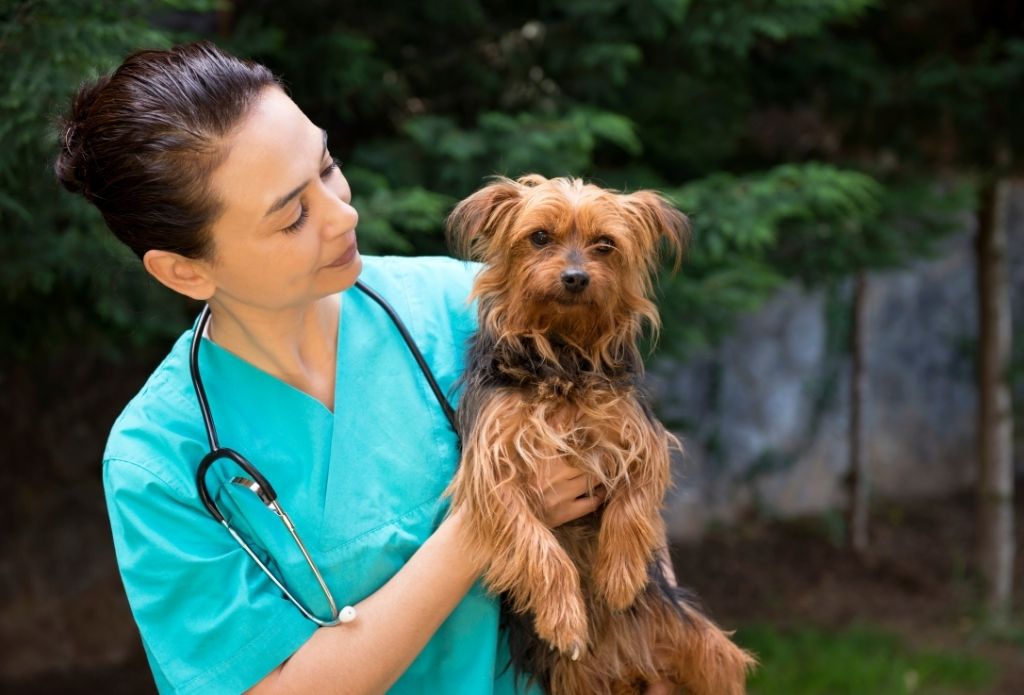
Long, Silky Coats: If your canine has a long, glamorous coat, just like that of a Yorkshire terrier, she’ll need day-to-day attention. Every day you’ll require to get rid of tangles with a slicker brush. Next, brush her coat with a bristle brush. If you have a long-haired pet dog with a coat like a collie’s or an Afghan hound’s, follow the steps above, but also make certain to comb through the fur and trim the hair around the feet.
Long Hair That’s Frequently Matted: For long-haired pooches, it’s a great idea to establish a daily grooming regular to get rid of tangles and prevent mats. Gently tease out tangles with a slicker brush, and then brush your pet with a bristle brush. If matting is especially thick, you might try clipping the hair, making sure not to come near the skin.
Knowing When to See the Veterinarion in Mermaid Waters QLD
You should organize a visit with your vet as soon as you find any abnormalities in your pet’s skin or hair, or if your pet begins to scratch, lick, or bite parts of his fur exceedingly.
Your vet might carry out diagnostic tests to determine the source of your pet’s signs, such as a skin biopsy, ringworm test, tiny examination of the hair and skin for parasites or infection, and blood tests to examine your canine’s total health.
Tips on Dental Care for Pet Owners in Mermaid Waters QLD
Routinely brushing your canine’s teeth, in addition to a healthy diet and a lot of chew toys, can go a long way toward keeping her mouth healthy. Germs and plaque-forming foods can cause build-up on a pet’s teeth. This can harden into tartar, potentially triggering gingivitis, receding gums and missing teeth. Lots of pooches reveal signs of gum illness by the time they’re four years old since they aren’t provided with appropriate mouth care.
Provide your pet dog routine house checks and you’ll have an extremely satisfied pooch with a dazzling smile. We advise brushing 2 to 3 times a week.
First, you’ll want to get your pet used to the concept of having thier teeth brushed. To do this, begin by carefully massaging her lips with your finger in a round motion for 30 to 60 secs once or twice a day for a few weeks before proceeding to their teeth and gums.
After a couple of sessions or when your pooch appears comfortable, put a bit of dog-formulated tooth paste on her lips to get her used to the taste.
Next, introduce a tooth brush designed particularly for
Indications of Oral Disease in Dogs
Once a week, lift your family pet’s lips and analyze his teeth and gums. The gums should be pink, not white or red, and must show no indications of swelling. His teeth must be tidy, without any brownish tartar. A veterinary examination beforehand might be practical to discover if your pet’s gums are inflamed.
Bad breath, excessive drooling, loose teeth, swollen gums, tumors in the gums or cysts under the tongue are signs that your pet dog may have a problem in his mouth or gastrointestinal system and must be checked by a veterinarian.
Getting familiar with these common mouth problems will help you figure out if it’s time for your pet to see a veterinarian:
Periodontal disease is an agonizing gum infection that can result in missing teeth and spread infection to the rest of the body. Indications are loosened teeth, foul breath, tooth pain, sneezing and nasal discharge.
Gingivitis is a swelling of the gums triggered primarily by build-up of plaque, tartar and disease-producing germs above and below the gum line. Signs include bleeding, red, swollen gums and halitosis. It is reversible with regular teeth cleanings.
Inflamed gums establish when tartar builds up and food gets stuck between the teeth.Routinely brushing your pet’s teeth in your home and getting yearly cleansings at the vet can avoid tartar and gingivitis.
Proliferating gum disease takes place when the gum grows over the teeth and need to be treated to avoid gum infection. An inherited condition common to boxers and bull terriers, it can be treated with prescription antibiotics.
Mouth tumors appear as swellings in the gums. Some are malignant and must be surgically removed.
Salivary cysts appear like large, fluid-filled blisters under the tongue, however can also build near the corners of the jaw. They need drain, and the harmed saliva gland should be removed.
Canine distemper teeth can happen if a pet dog had distemper as a young puppy. Adult teeth can appear looking deteriorated and can frequently decay. As damage is irreversible, decayed teeth must be gotten rid of by a vet.
Tips on Eye Care for Pet Owners in Mermaid Waters QLD
Did you know that you can offer frequent eye care for your canine in the house? Regular home eye exams will guarantee you’re conscious of any eye tearing, inflammation, cloudiness, and health issues.
Initially, get your pet dog to sit and face a brightly lit area when examining their eyes. If healthy, they should be lit and clear, and the surrounding location to the eyeball will be white. The pupils need to be equally sized and there should not be any signs of tearing, crust, or discharge on the sides of their eyes.
To remove any substance in their eyes, use a gentle wipe and a damp cotton ball. Cautiously clean in the outer direction from the edge of their eyes and make certain you do not touch their eyeball. Its best you get medical attention from your local Mermaid Waters vet as they might have an infection if your fur baby frequently has actually runny eyes caused from discharge.
Signs of Ear Problems in Canines
Given that pet dogs have twisty, curved inner ears, it can be fairly easy for bacteria, parasites and yeast to get stuck within and trigger infections. Dogs with allergic reactions and pet dogs with floppy ears like Poodles and Cocker Spaniels are especially susceptible to ear issues. Dark, dry ear wax and black or brown ear wax are also common indications of microscopic ear mites. If your pet’s ear wax resembles this, you need to go to your local Mermaid Waters veterinarian to learn what the problem is and how to fix it.
If you see any of the following signs with your pet dog’s ears, contact your vet.
- Ear discharge
- Ear odor
- Ear redness
- Ear swelling
- Crusty skin around the ear
- Hair loss around the ear
Assisting Fearful Pet Dogs
Some pets might also be frightened when getting their nails trimmed. Look out for any signs of distress like trembling, panting, grumbling, cowering, tail-tucking, grumbling, or snapping. Even with the most patient and stable of intros, there are some dogs who are not able to get over this fear.
If your canine is afraid of getting their nails cut, do not force them to submit. Rather, see a veterinarian or a groomer in Mermaid Waters and get expert help. Otherwise, you could organise a visit with a Certified Applied Animal Behaviorist (CAAB), a veterinary behaviourist (Dip ACVB) or a Certified Professional Dog Trainer (CPDT).
Avoiding Paw Problems in Dogs
When beginning a brand-new workout routine with your pet, start it gradually. Their paws can quickly end up being sensitive or cracked, especially with long hikes or runs. Ensure your yard and house are clear from any threats and also prevent hazards like debris and broken glass when out for walks. Lastly, always remember this basic suggestion – if you wouldn’t wish to stroll barefoot on it, neither will your family pet!